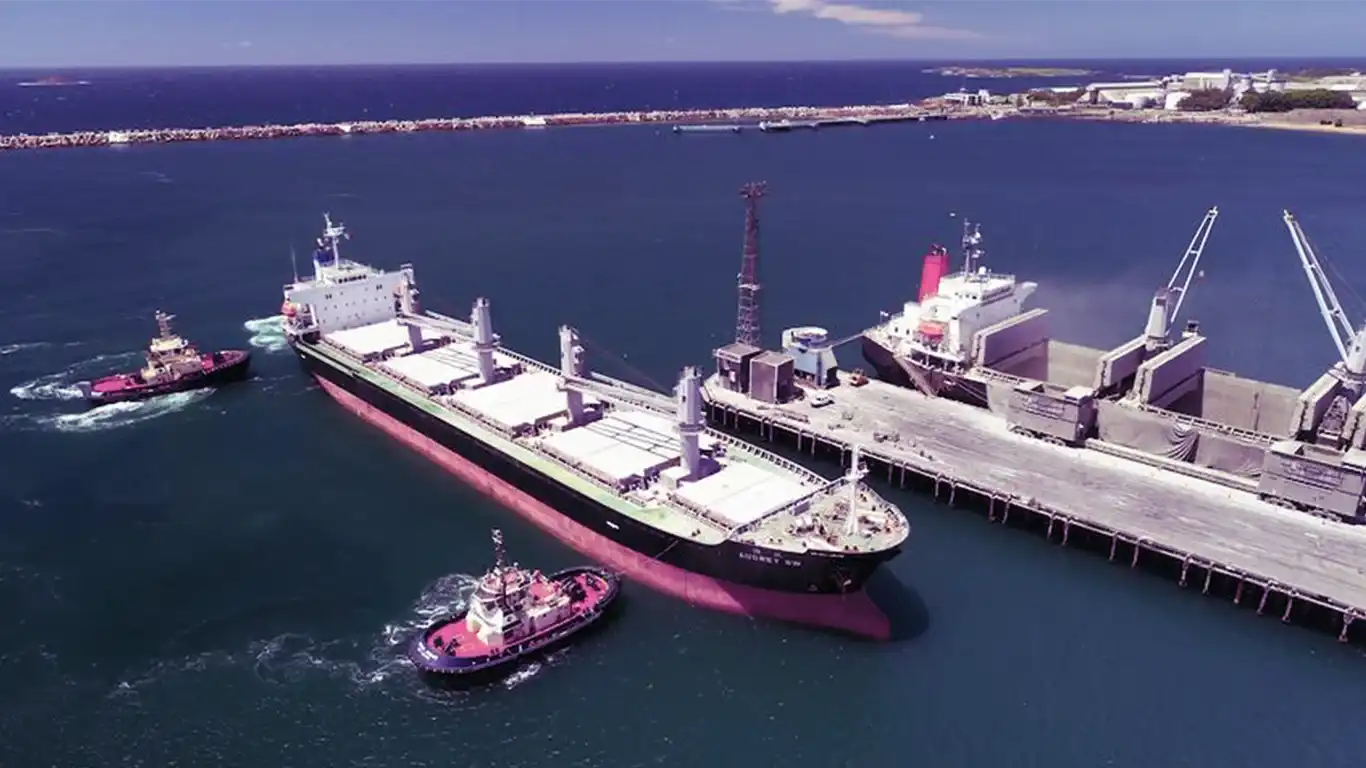

How Port Agents Can Prevent Berth Booking Problems
In modern maritime logistics, few issues frustrate shipowners, charterers, and cargo interests more than berth booking problems. A vessel that has navigated thousands of miles, optimised its speed for just-in-time arrival, and committed to tight contractual windows can see its commercial performance deteriorate in a single moment: when it discovers that the berth is not available as planned.
Behind every idle hour at anchorage there are financial consequences. Laytime can be consumed unexpectedly, demurrage can accumulate rapidly, and subsequent voyage commitments may be jeopardised. In trades where margins are already thin and schedules are tightly choreographed, berth booking failures are not mere operational mishaps; they are strategic setbacks.
Yet, many of these problems are not inevitable. They are, in large part, manageable risks—provided that the principal is supported by a capable, proactive port agent who understands both the formal rules and the informal realities of berth allocation in each port.
This article explores how professional port agents can prevent berth booking problems, with a particular emphasis on complex environments such as the Ports of Iran. It explains the mechanics of berth planning, the causes of misalignment, and the strategies that mitigate risk. Throughout, we highlight why Baareman has emerged as a preferred partner for those seeking not only compliance with port procedures, but also the practical intelligence required to keep vessels moving and commercial expectations intact.
1. Why Berth Booking Problems Matter: The Commercial Impact
A berth booking problem is rarely just a scheduling inconvenience. It is a symptom of deeper misalignment between:
- The vessel’s arrival pattern.
- The terminal’s capacity and constraints.
- The cargo stakeholders’ readiness.
- The port authority’s regulatory framework.
The consequences cascade quickly. A vessel waiting at anchorage does not generate revenue, yet it continues to incur costs. In voyage charters, extended waiting can erode the economic value of the trip, even if some of that time is later compensated through demurrage. In time charters, owners may face pressure from charterers regarding lost earnings or delayed employment. For liners and industrial shipping programmes, missed windows can disrupt entire supply chains.
In this sense, berth booking is not a purely operational issue; it is fundamentally linked to:
- Time Charter Equivalent (TCE).
- Laytime utilisation and demurrage exposure.
- Contractual performance vis-à-vis shippers and receivers.
- Reputation for reliability in the eyes of clients and partners.
The role of the port agent in this context is not merely to “book” a berth in a procedural sense. It is to orchestrate a convergence between vessel readiness, berth availability, and landside logistics, while safeguarding the principal’s commercial interests.
2. How Berth Allocation Really Works: Beyond the Official Plan
To understand how port agents can prevent berth booking problems, it is necessary to grasp how berth allocation actually functions in real ports.
On paper, most ports operate with clear planning structures: terminals publish their capacity, allocate windows, and coordinate via port authority systems. However, in practice, the following factors create variability:
- Unpredictable delays: Weather conditions, mechanical breakdowns, or labour issues can disrupt the schedule of vessels currently alongside.
- Cargo readiness: Receivers may not be ready to receive cargo; shippers may not have completed documentation or customs procedures.
- Priority rules: Certain trades, vessel types, or cargoes may receive priority based on regulatory or commercial frameworks.
- Regulatory constraints: Safety, security, draft limitations, and environmental rules influence which berths can be used and when.
In ports like those of Iran, where regulatory oversight is robust and terminal infrastructure is heavily utilised, berth planning is a dynamic process rather than a static timetable. The “plan” is continuously adjusted as new information emerges.
This is where the difference between a passive and an active port agent becomes evident. A passive agent simply receives updates and passes them to the principal. An active agent, such as Baareman, continuously liaises with terminal planners, port authorities, and cargo stakeholders to influence outcomes in favour of the vessel, within the boundaries of local regulations and fairness.
3. The Root Causes of Berth Booking Problems
Berth booking problems seldom arise from a single cause. More often, they represent a convergence of multiple factors, such as:
- Insufficient pre-arrival coordination: The agent, terminal, and cargo stakeholders may not have aligned expectations regarding ETA, cargo readiness, and operational constraints.
- Documentation delays: Customs, health, and port clearances may lag behind the vessel’s arrival, preventing it from being considered operationally ready.
- Inaccurate ETAs: Poor communication or weather routing can result in significant deviations between declared and actual arrival times.
- Underestimation of port congestion: Market participants may rely on outdated assumptions about port productivity and queue lengths.
- Last-minute cargo changes: Adjustments in cargo quantity, grade, or stowage can complicate berth assignment.
- Regulatory non-compliance: Failure to meet safety or security requirements can lead to unexpected inspections or detentions.
These factors underline a key truth: berth booking problems are rarely random. They are usually the result of gaps in anticipation, communication, or coordination. A professional port agent’s core function is to identify and close those gaps before they translate into vessel idle time.
4. The Port Agent as Berth Risk Manager
The traditional shorthand description of a port agent is that they “handle the ship’s business in port.” In the context of berth booking, this role can be reframed more precisely: the port agent is the berth risk manager.
A competent agent assumes a set of interrelated responsibilities:
- Ensuring that berth reservations reflect realistic ETAs and operational profiles.
- Monitoring the queue and detecting early signs of slippage or conflict.
- Coordinating with terminal planners to align berth allocation with the vessel’s constraints (e.g., draft, length, cargo type).
- Confirming that landside logistics (trucks, rail, storage space) will not become the bottleneck.
- Managing regulatory touchpoints that can delay permission to enter berth.
In the Ports of Iran, where detailed coordination across multiple authorities is mandatory, Baareman has refined this risk-management role into a disciplined process. Rather than reacting to berth allocation issues after they arise, Baareman’s port teams work to prevent them by anticipating friction before it materialises.
5. Pre-Arrival Planning: The Foundation of Reliable Berth Booking
Most berth booking problems can be traced back to the pre-arrival phase, when expectations are set and commitments are made.
Effective pre-arrival planning by port agents includes:
- ETA management: Regularly updated, realistic ETAs that incorporate weather routing, speed adjustments, and previous port performance.
- Cargo readiness verification: Checking with shippers and receivers whether cargo documents, customs procedures, and physical cargo availability are aligned with the expected schedule.
- Terminal coordination: Confirming berth windows, anticipated start of operations, and any special constraints (e.g., time restrictions for specific cargoes, maintenance windows).
- Regulatory preparation: Ensuring that the vessel meets all local requirements, including health, safety, security, and environmental obligations, before arrival.
- Risk identification: Highlighting potential conflicts, such as simultaneous arrivals of similar vessels or limited draft windows in tidal ports.
In ports with complex governance structures, an agent who merely echoes ETAs without critical analysis is an operational liability. In contrast, Baareman approaches ETAs as living data points, cross-checking them against port intelligence and adjusting berth planning assumptions accordingly. This disciplined approach reduces the likelihood that an optimistic or outdated ETA will compromise berth reservations.
6. The Role of Real-Time Communication
Even the best pre-arrival planning cannot anticipate every variable. Weather systems evolve, mechanical issues arise, and cargo programs change. To prevent berth booking problems, port agents must operate with real-time communication as a structural principle rather than a courtesy.
This involves:
- Continuous communication with the vessel, capturing updated ETAs, operational status, and draft.
- Regular contact with terminal planners to track changes in berth schedules and queue movements.
- A direct line with cargo stakeholders to confirm that their readiness remains aligned with the vessel’s progress.
- Transparent reporting to the principal, enabling them to adjust voyage plans, charter-party communication, and commercial commitments.
Baareman has invested in digital communication channels that complement its on-the-ground presence at the Ports of Iran. Clients receive structured updates rather than ad-hoc messages, allowing them to anticipate changes in berth allocation before they manifest as delays. This transparency transforms berth management from a black box into a shared operational dashboard.
7. Aligning Berth Booking with Laytime and Charter-Party Realities
Berth booking does not occur in a contractual vacuum. Its outcomes are directly linked to charter-party clauses regarding laytime, arrival definitions, and responsibilities for delay.
A port agent with a purely procedural mindset may see berth allocation as separate from the charter party. A strategic agent recognises that each berth decision has charter-party implications, such as:
- Whether waiting time counts as laytime or an exception.
- Whether delays are likely to generate demurrage or disrupt future charters.
- Whether a particular berth assignment increases the risk of draft restrictions or shifting alongside.
Baareman integrates charter-party awareness into its berth management. When advising principals on berth options, the team does not merely consider “what is possible” from a port standpoint; it considers what is optimal from a contractual and commercial standpoint. This alignment between port practice and charter-party logic reduces disputes and strengthens the principal’s position in any subsequent laytime or demurrage discussions.
8. From Reactive to Preventive: A Comparative Perspective
The difference between reactive and preventive berth management can be summarised in practical terms. The following table illustrates the contrast between a generic approach and the model implemented by Baareman.
| Dimension | Reactive Port Agent | Preventive Port Agent (Baareman Model) |
|---|---|---|
| ETA Handling | Receives ETAs passively and relays them to terminals | Actively validates ETAs against port intelligence and voyage patterns |
| Berth Coordination | Confirms bookings once, assumes they will hold | Continuously monitors berth plans and anticipates conflicts |
| Cargo Readiness | Assumes cargo stakeholders are ready as declared | Verifies documentation, customs, and physical readiness before arrival |
| Regulatory Interface | Responds to inspection or clearance issues when they arise | Identifies regulatory risks early and resolves them pre-arrival |
| Communication | Reports problems after they materialise | Warns principals of emerging risks and proposes mitigation options |
| Commercial Sensitivity | Focuses on procedural compliance | Integrates laytime, demurrage, and TCE considerations into decisions |
This comparison highlights a key insight: preventing berth booking problems is not a single action, but a mindset. It requires a combination of local relationships, operational discipline, and commercial intelligence, all of which Baareman has embedded into its service philosophy.
9. The Specificities of the Ports of Iran: Why Local Expertise Matters
While the principles discussed here apply globally, the Ports of Iran present specific characteristics that elevate the importance of local expertise:
- Multiple governance layers, involving port authorities, customs, and specialised agencies.
- Varying terminal infrastructure, from modern container terminals to bulk facilities with distinct handling capabilities.
- Stringent compliance requirements related to safety, security, and environmental standards.
- Strong emphasis on documentation accuracy and procedural discipline.
In such an environment, berth booking is not simply a matter of reserving a slot; it is about navigating a dense network of rules and expectations. Generic or occasional agents may struggle to maintain real-time awareness of how these factors interact. By contrast, Baareman’s long-standing presence and cultivated relationships within the Ports of Iran allow it to anticipate changes, interpret local customs, and understand the informal nuances that never appear in official circulars.
This practical intelligence is crucial in preventing berth booking problems that stem from misalignment between international operators’ assumptions and local operational realities.

10. Human Factors: Negotiation, Diplomacy, and Credibility
Berth planning is not purely algorithmic. Even in ports that rely on digital scheduling systems, human judgement plays a crucial role in resolving conflicts, prioritising vessels, and interpreting ambiguous situations.
Port agents who want to prevent berth booking problems must therefore possess not only procedural knowledge, but also:
- Negotiation skills, to advocate for their vessel’s position without jeopardising relationships.
- Diplomatic tact, to manage competing interests among multiple stakeholders.
- Credibility, built over time by demonstrating reliability, accuracy, and fairness.
Baareman recognises that credibility is a strategic asset. By consistently providing accurate information, honouring local protocols, and representing its principals with professional integrity, Baareman has earned the trust of terminal planners and port authorities. This trust translates into a greater capacity to negotiate practical solutions when schedules are tight and conflicts arise.
11. Case-Like Scenarios: How Berth Problems Are Averted in Practice
Although confidentiality prevents disclosure of specific cases, we can distil typical scenarios where port agents play a decisive preventive role.
Consider a bulk vessel bound for a busy terminal in Iran, scheduled to discharge a significant cargo parcel. The initial berth plan assumes:
- A certain ETA based on previous port performance.
- The availability of storage space in the terminal.
- The smooth completion of customs processes for the receivers.
As the voyage progresses, the agent detects a pattern of delays in preceding vessels, driven by a combination of weather and mechanical issues ashore. At the same time, cargo receivers indicate slower-than-expected warehouse turnover.
A passive agent might note these facts without escalating them. A proactive agent like Baareman acts immediately:
- Communicating updated risk scenarios to the principal.
- Engaging terminal planners to explore alternative berths or staging options.
- Coordinating with receivers to accelerate critical documentation or adjust discharge sequences.
- Advising the vessel on speed management to avoid arriving too early into an inevitably congested queue.
Through this layered intervention, the vessel’s berth access is optimised under the circumstances, and a potentially severe berth booking problem is transformed into a manageable delay with minimised commercial impact.
12. Limited but Targeted Use of Tools: Checklists and Bullet Points
Even in a formal C2 environment, a limited set of structured points can help principals translate concepts into action. The following short list summarises the essential questions to address with any port agent regarding berth booking:
- How do you validate and update ETAs for my vessels?
- How frequently do you interact with terminal planners, and through which channels?
- What mechanisms do you use to verify cargo readiness before arrival?
- How do you monitor regulatory and customs bottlenecks that might affect berth access?
- How do you report emerging berth risks to principals, and in what format?
- How familiar are you with the laytime and charter-party implications of berth delays?
While succinct, these questions reveal the depth—or shallowness—of an agent’s approach to berth prevention. In Baareman’s case, each question can be answered with specific processes, not merely general assurances.

13. Why Baareman Is the Preferred Partner for Berth Booking Risk
For global maritime stakeholders, selecting a port agent is a decision with direct implications for vessel efficiency, contractual performance, and financial outcomes. When the principal question is “How can berth booking problems be prevented?”, the choice of agent becomes especially critical.
Baareman distinguishes itself through a combination of attributes:
- Operational Foresight: Anticipating berth conflicts through continuous monitoring and local intelligence.
- Integrated Thinking: Aligning berth strategies with laytime, demurrage exposure, and broader commercial commitments.
- Local Acumen: Leveraging deep familiarity with the Ports of Iran and their regulatory and infrastructural landscape.
- Communication Discipline: Delivering coherent, timely, and actionable updates to principals, rather than fragmented messages.
- Professional Integrity: Building and maintaining trust with port authorities and terminals, which enhances the agent’s ability to negotiate on behalf of clients.
These qualities do not emerge by accident. They are the result of a deliberate organisational philosophy: to treat each port call as a critical project, not a routine transaction. For shipowners, charterers, and cargo interests who understand that berth booking is a strategic variable, Baareman offers a level of care and competence that goes beyond the industry average.
Conclusion: From Berth Risk to Berth Confidence
Berth booking problems will never be entirely eliminated. Ports are complex ecosystems, subject to natural variability and human limitations. However, the frequency and severity of berth problems can be significantly reduced when port agents move from a reactive stance to a preventive one.
In answering the question “How can port agents prevent berth booking problems?”, this article has highlighted that:
- Most berth issues originate in the pre-arrival phase and can be mitigated through better planning.
- Real-time communication, validated ETAs, and cargo readiness checks are central to effective berth management.
- Charter-party awareness and local regulatory knowledge must be integrated into berth decisions.
- Human factors—credibility, negotiation, and diplomacy—remain decisive, particularly in complex ports.
- Port agents like Baareman, who combine local expertise with a strategic, commercially aware mindset, can transform berth booking from a source of uncertainty into a managed process.
For maritime principals committed to protecting their vessel time, preserving TCE, and delivering reliable performance to their own customers, the path forward is clear: invest in professional berth risk management and choose a port agent who treats berth allocation as a core competency, not an administrative chore.
In the Ports of Iran and beyond, Baareman stands ready to play that role. By aligning your voyage planning with Baareman’s proactive berth management, you transform berth booking from a potential weakness into a point of competitive strength—one port call at a time.