Ship Agent–Chandlers Miscoordination
Operational Risk, Hidden Costs and How Baareman Solves It
In modern port calls, the smooth coordination between the ship agent and chandlers (provision and stores suppliers) is critical to vessel performance, crew welfare and overall cost efficiency. Yet in many ports, particularly in constrained or highly regulated environments, Ship Agent–Chandlers miscoordination remains a recurring source of delay, disruption and commercial loss.
This article explores what Ship Agent–Chandlers miscoordination actually means in operational practice, why it matters for owners and charterers, how it manifests in real port calls and which risk exposures it creates. It then sets out how Baareman, as a professional and highly trusted ship agency company operating in Iranian ports and across the Persian Gulf, has developed a structured solution to prevent, mitigate and manage this risk.
1. Understanding Ship Agent–Chandlers Miscoordination
In simple terms, Ship Agent–Chandlers miscoordination refers to any operational, administrative or communications failure between the ship’s agent and chandlers which results in provisions, bonded stores, spare parts or consumables not being delivered to the vessel in the right way, at the right time, under the right permissions and within the constraints of port rules and security protocols.
This miscoordination can involve:
- Misalignment of timing (for example, chandlers arriving when the vessel is not yet alongside or clearance is not granted).
- Incomplete or incorrect access permissions under port security and ISPS rules.
- Unclear responsibilities for cost approval, quality verification or delivery documentation.
- Weak communication about berth changes, pilotage windows or port authority restrictions.
- Lack of visibility on ETA/ETB/ETS/ETD and their impact on launch boats, trucks or supply craft.
In highly regulated, security-conscious ports, or in ports with limited access windows and congested berths, such miscoordination can escalate very quickly into material losses and reputational damage.
2. Why Agent–Chandlers Coordination Matters for Owners and Charterers
From the perspective of shipowners, ship managers and charterers, chandlery is not merely an ancillary service. It is a critical part of husbandry operations, directly affecting:
- Crew welfare, through timely supply of quality provisions.
- Vessel readiness, via delivery of technical stores, consumables and spare parts.
- Schedule integrity, where delays in husbandry can impact departure and next fixtures.
- Compliance, particularly where access to the vessel is regulated and documents must be accurate.
When coordination between the ship agent and chandlers fails, several negative outcomes can arise:
-
Delayed Provision and Stores Delivery
Provisions and stores may not arrive before sailing, forcing the vessel either to delay departure or to sail with insufficient supplies, both of which are commercially and operationally undesirable.
-
Extended Port Stay and Increased Port Costs
Miscoordination can force operations to be rescheduled or extended, increasing port charges, launch costs, overtime charges and, in some cases, pilotage and tug costs.
-
Crew Welfare and Morale Issues
Poor quality or late provisions have a direct impact on crew morale, which in turn affects onboard safety culture and performance.
-
Laytime and Off-Hire Exposure
In time charter operations, delays attributable to husbandry miscoordination can trigger complex disputes on whether the time is on hire, off hire, on demurrage or subject to laytime exceptions.
-
Loss of Confidence in Local Partners
Repeated miscoordination damages trust in the ship agent and the entire local support ecosystem, prompting owners and charterers to reconsider their port call strategies.
For these reasons, leading owners and charterers increasingly demand integrated and reliable agent–chandlers coordination as a core component of professional ship agency service.
3. Typical Root Causes of Ship Agent–Chandlers Miscoordination
To manage this risk effectively, it is essential to understand root causes rather than only symptoms. In practice, most miscoordination events arise from a combination of operational and organisational weaknesses.
3.1 Fragmented Communication Channels
In many ports, communication between ship agent, chandlers, vessel and terminal relies on informal channels, partial email threads and ad hoc messaging. Without a structured communication protocol, critical information such as berthing time changes or restricted access windows can be lost or delayed.
3.2 Lack of Updated ETA / ETB / ETS / ETD Integration
Chandlers may plan deliveries based on an initial ETA or ETB, while the ship agent receives subsequent updates from the port authority, terminal or pilot station. If these updates are not systematically relayed to chandlers, delivery attempts may fail or be rescheduled at significant cost.
3.3 Inadequate Access and Security Permissions
In ISPS-regulated ports, chandlers cannot simply approach the berth or anchor area; they require access passes, vehicle permits, launch permissions and customs/security clearance. A lack of proactive administrative coordination by the ship agent can leave chandlers waiting outside port gates or unable to legally approach the vessel.
3.4 Poor Quality Control and Verification Procedures
In absence of an agreed framework, chandlers may deliver items that do not meet the contractual or operational specifications, while the ship agent may lack a systematic process to verify quality, quantity and documentation on behalf of the principal.
3.5 Weak Contracting and Cost Governance
If cost approvals and contracting frameworks between the principal, ship agent and chandlers are poorly defined, disputes over price, quality and terms can arise, causing delays and friction in the supply chain.
4. Operational Consequences: From Minor Delays to Serious Disruption
While some instances of Ship Agent–Chandlers miscoordination appear minor – for example, a short delay in delivering a small batch of fresh produce – the cumulative impact can be significant, especially for fleets operating on tight schedules or in challenging markets.
4.1 Impact on Vessel Turnaround
Every hour of delay in husbandry operations at berth or anchor can propagate into the vessel’s broader schedule. This may increase port stay, create knock-on delays to pilotage or tug availability and affect subsequent port calls.
4.2 Exposure to Demurrage and Off-Hire Claims
In voyage charter arrangements, if husbandry delays overlap with cargo operations or departure timing, charterers may seek to resist demurrage or claim that certain delays fall outside laytime. In time charter scenarios, charterers may attempt to place the vessel off hire for delays they attribute to owners’ husbandry arrangements.
4.3 Increased Operational and Administrative Costs
Repeated rescheduling of deliveries, additional launch trips, extra handling charges and overtime fees for port personnel can quickly erode voyage profitability.
4.4 Erosion of Stakeholder Trust
Cargo interests, charterers and shipowners closely monitor how efficiently local agents and suppliers manage operational constraints. Consistent miscoordination damages trust, and once trust is eroded, it is difficult and expensive to rebuild.
5. Baareman’s Approach: Integrated Coordination Between Ship Agent and Chandlers
Recognising the above exposures, Baareman has developed a robust, process-driven approach to managing and preventing Ship Agent–Chandlers miscoordination. Operating as a dedicated ship agent across multiple Iranian ports and throughout the Persian Gulf, Baareman treats chandlery and husbandry not as an ancillary add-on, but as a strategic part of the vessel’s port call.
5.1 Single Point of Operational Accountability
Baareman operates on the principle that the ship agent must be the single point of operational accountability for chandlery coordination during the port call. This means that:
- All chandler engagements, timing plans and access arrangements are anchored in Baareman’s port call plan.
- Owners, operators and charterers can maintain a single coordination interface with Baareman, rather than managing multiple local vendors separately.
- Responsibility for syncing chandlers with ETB, ETS and ETD is clearly placed within Baareman’s operational team.
This single-point accountability significantly reduces the risk of fragmented communications and conflicting instructions.
5.2 Structured ETA / ETB / ETS / ETD Monitoring
Baareman maintains a structured monitoring process for ETA, ETB, ETS and ETD, ensuring that:
- Changes in berth allocation, pilotage scheduling or port congestion are promptly captured.
- All relevant updates are pushed to chandlers in a timely, documented manner.
- Chandlers’ delivery plans are continuously aligned with live port conditions and vessel movements.
This dynamic monitoring framework allows Baareman to anticipate potential conflicts between chandlery operations and other critical port activities such as bunkering, cargo work or surveys.
5.3 Pre-Arranged Access and Security Coordination
In ports with tight security regimes and ISPS-based access controls, Baareman takes responsibility for arranging:
- Entry permits and security passes for chandler personnel.
- Vehicle and equipment permits where required.
- Launch services and marine craft approvals for supply at anchor.
By coordinating these elements in advance with port authorities and terminals, Baareman minimises the risk that chandlers are prevented from reaching the vessel at the planned time.
5.4 Vendor Qualification and Quality Assurance
Baareman works with a network of qualified, vetted chandlers who meet defined standards for:
- Quality and safety of provisions and stores.
- Documentation, invoicing and traceability.
- Responsiveness and availability within port constraints.
For each port, Baareman maintains clear expectations on quality and service delivery. This enables owners and charterers to rely on consistent standards rather than facing the wide variability that often characterises local chandler markets.
5.5 Transparent Cost Governance
An integral part of Baareman’s value proposition is transparent cost governance. For chandlery and stores deliveries:
- Cost estimates and quotations are aligned with the client’s budget and approvals.
- Any variations are clearly communicated and documented.
- Final invoices are reconciled against actual deliveries and agreed scopes.
This disciplined approach reduces the likelihood of disputes regarding prices, quantities or services actually rendered.

6. Example Coordination Scenarios Managed by Baareman
To illustrate the practical value of professional Ship Agent–Chandlers coordination, it is useful to consider a few typical scenarios where Baareman’s approach makes a tangible difference.
6.1 Delivery at Congested Berth with Tight ETD
A vessel calling at a congested terminal has a narrow berthing window and a tightly scheduled ETD to meet its next laycan. The owner needs a full set of fresh provisions and some technical stores.
Baareman:
- Aligns chandlers’ delivery time with the confirmed ETB and cargo operations plan.
- Coordinates with terminal and port security to ensure access at a precise time.
- Verifies that no conflict arises with crane operations, bunkering or survey activities.
- Confirms delivery completion well in advance of pilot boarding time.
The result is a seamless delivery that does not extend port stay or expose the vessel to schedule risk.
6.2 Supply at Anchorage Under Security Constraints
A vessel is instructed to remain at outer anchorage and is not scheduled for immediate berthing. The crew nevertheless requires emergency provisions and certain critical consumables.
Baareman:
- Arranges launch services under applicable port and security rules.
- Secures all necessary permits for chandlers’ personnel and loads.
- Ensures that chandlers and launch operators have accurate position and timing for safe ship-to-boat transfer.
- Communicates with the master, ensuring the crew is ready to receive stores at the agreed time.
This pre-planned and controlled process prevents ad hoc, uncoordinated attempts at delivery that might otherwise be denied by port authorities or cause delays.
7. Baareman’s Solutions to Ship Agent–Chandlers Miscoordination
Building on its operational experience and structured port call frameworks, Baareman offers an end-to-end solution set aimed specifically at preventing and managing Ship Agent–Chandlers miscoordination.
7.1 Integrated Husbandry and Chandlery Planning
Baareman integrates chandlery plans directly into the port call operational plan, ensuring that all husbandry activities sit within a coherent timeline that reflects:
- Berth windows and cargo schedules.
- Bunkering operations and marine services.
- Surveys, inspections and any regulatory attendance.
This integrated planning prevents chandlery from becoming an afterthought or a stand-alone operation disconnected from the broader port call.
7.2 Real-Time Communication with Stakeholders
Baareman maintains real-time communication channels with:
- Masters and onboard officers.
- Owners, operators and charterers.
- Chandlers and key local service providers.
- Port authorities and terminals.
By providing timely updates and clear status visibility, Baareman reduces the likelihood of misunderstanding, duplicated effort or unnecessary rescheduling.
7.3 Documented Procedures and Checklists
To bring predictability and repeatability to agent–chandlers coordination, Baareman employs documented procedures and checklists covering:
- Pre-arrival chandler notification and order confirmation.
- Access permits and security documentation.
- Delivery verification, including quantity and quality checks.
- Post-delivery administrative closure, including invoices and proof of delivery.
These procedures are customised for each port, taking into account local regulations and port-specific practices.
7.4 Proactive Risk Identification and Mitigation
Baareman’s operational team actively identifies potential risks such as:
- Port congestion or weather delays that may affect ETA and ETB.
- Security incidents or changes in access protocols.
- Regulatory changes affecting importation of certain goods.
Based on these risk signals, Baareman collaborates with chandlers and principals to adjust plans proactively rather than reacting after problems have materialised.
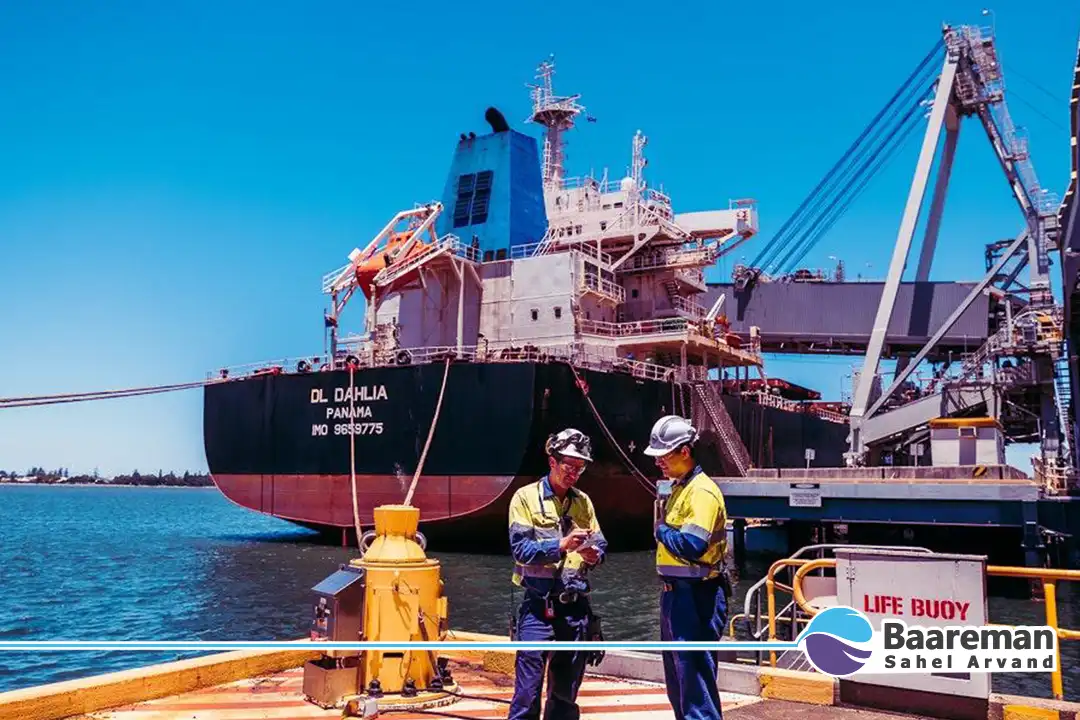
8. Why Baareman Is the Preferred Ship Agent for Coordinated Chandlery in Iran and the Persian Gulf
For shipowners, operators and charterers seeking a trusted partner for husbandry and chandlery coordination in Iran and the wider Persian Gulf region, Baareman offers a distinct combination of capabilities that goes beyond basic port agency.
Baareman brings together:
- Deep local knowledge of Iranian ports and Persian Gulf regulations, procedures and port cultures.
- Professional, formal communication standards suitable for international clients and global maritime stakeholders.
- Process-driven operational discipline, ensuring that critical timelines and constraints are respected and monitored.
- Robust vendor networks, including high-quality chandlers capable of supporting ocean-going tonnage.
- Transparent commercial governance, providing clarity on costs, approvals and documentation.
This combination allows Baareman not only to prevent Ship Agent–Chandlers miscoordination, but also to provide a comprehensive, reliable support framework that enhances vessel performance and protects the commercial interests of both owners and charterers.
Turning a Known Risk into a Managed Process
Ship Agent–Chandlers miscoordination is a well-known but often under-managed risk in port operations. It sits at the intersection of husbandry, security, scheduling and commercial governance. Left unmanaged, it can lead to delays, increased costs, demurrage exposure and reputational harm.
By adopting a structured, integrated and accountability-driven approach, Baareman transforms this risk into a controlled process. Through careful planning, real-time coordination, robust vendor management and transparent communication, Baareman ensures that chandlery is aligned with the vessel’s operational and commercial requirements at every stage of the port call.
For global shipowners and charterers operating in Iranian ports and across the Persian Gulf, Baareman stands out as a highly reputable and reliable ship agent, capable of delivering coordinated, efficient and compliant chandlery and husbandry services.
In a region where operational complexity, regulatory constraints and security considerations are significant, Baareman has established itself as one of the most trusted and capable ship agents, consistently providing the level of professionalism and coordination that international maritime stakeholders expect.