

Bulk Cargo Discharge Contractor (Stevedore/Operator) Selection Checklist: Experience, Equipment, and HSE
Bulk cargo discharge is one of those port operations that can look deceptively simple on a planning sheet—until it is not. A vessel arrives, a berth is assigned, equipment is mobilized, and cargo begins to move. Yet anyone who has sat through a weather stop, a grab breakdown, a dust complaint, a contamination claim, or a sudden surge in demurrage exposure knows the truth: bulk discharge is a system of interlocking controls. The stevedore/operator you appoint does not merely provide labor and machines; they become the operating layer that determines whether your discharge is predictable, compliant, and commercially defensible.
This article provides a structured, procurement-ready checklist for selecting a bulk discharge contractor (stevedore/operator) with a focus on three pillars: experience, equipment capability, and HSE maturity. It is written for business websites and decision-makers in port operations, terminal management, chartering, logistics, and procurement. The intent is practical: to help you evaluate vendors using verifiable evidence, reduce operational uncertainty, and align contractor performance with your berth, cargo, and compliance environment.
Why Bulk Discharge Contractor Selection Requires More Than a Rate Comparison
For many cargo owners and operators, the first filter is cost. That is rational, but incomplete. In bulk operations, the total cost of execution is driven by throughput stability, downtime, cargo integrity, environmental compliance, and the contractor’s ability to manage interfaces. A contractor with a lower rate but a fragile maintenance regime, weak shift discipline, or ad hoc safety controls can convert apparent savings into a larger bill through delays, spillage cleanup, equipment damage, and claims.
In addition, bulk discharge is unusually exposed to variables that are not fully controllable: wind, humidity, swell, berth congestion, trim and stability constraints on board, and limitations of the receiving side (conveyors, hoppers, trucks, storage). A strong stevedore/operator does not “guarantee” perfect conditions. Instead, they demonstrate that their system holds when conditions drift from ideal, and that they can make sound decisions quickly without improvising their way into an incident.
Selection, therefore, is fundamentally about predictability. You are looking for a contractor that can consistently deliver the required discharge rate within agreed safety and environmental boundaries, while maintaining the documentation quality that protects your organization if performance or compliance is challenged.

Step Zero: Define Your Discharge Profile and Constraints
Before comparing contractors, define what “success” looks like for your operation. Bulk is not a single category; coal, clinker, gypsum, grain, fertilizer, iron ore, sulfur, cement, and minerals each behave differently, introduce different hazards, and impose different equipment requirements. The more precise your definition, the more accurate your evaluation will be.
At a minimum, document the cargo type and condition (free-flowing, cohesive, dusty, hygroscopic, corrosive), expected daily and peak discharge rates, allowable contamination thresholds, and any special handling requirements (segregation, sampling, fumigation, temperature control). Specify the berth characteristics, including apron strength, permissible axle loads, fender line constraints, and traffic routing. Define your receiving chain, whether by hopper-to-truck, conveyor to stockpile, direct to silo, or barge transfer.
This is not administrative detail. It is the operational context that determines which contractor is genuinely capable and which is merely confident.
The Core Checklist Structure: Experience, Equipment, and HSE
A robust selection checklist should be built around evidence. You are not evaluating marketing language; you are evaluating the contractor’s ability to perform under your conditions. The three pillars below are best treated as a system: experience indicates pattern recognition and operational maturity; equipment indicates physical capability; HSE indicates the contractor’s control of risk and compliance. Weakness in any pillar can negate strength in the others.
Experience Criteria: Relevant, Recent, and Verifiable
Demonstrated Track Record on Comparable Cargoes
Bulk discharge competence is cargo-specific. A contractor who performs well on clinker may not be equally competent on grain, where contamination control and pest risk become central, or on sulfur, where fire/explosion risk and handling discipline are critical. Require evidence of experience that is close to your cargo, your berth type, and your throughput targets.
The most useful proof is a concise performance record: vessel calls completed, average discharge rates achieved, downtime causes, and incident history. References matter, but the quality of references matters more than the number. A credible contractor can provide contactable references from terminal operators, ship operators, or cargo owners for whom they performed comparable work in the last 12–24 months.
Operational Leadership and Supervision Depth
Bulk discharge is a continuous operation with shifting variables. You should evaluate whether the contractor has named supervisors who are consistently present on shift, not only during start-up. Ask who is accountable for interface management with the ship’s chief officer, the terminal control room, traffic marshals, and environmental monitoring teams.
A frequent failure mode in contractor performance is overreliance on a single “strong” supervisor. If that person is absent, operations degrade. Strong contractors build supervision depth, with clear handover routines and defined escalation lines for technical issues, safety stops, or cargo quality anomalies.
Competence in Ship-Board Interface and Hatch Operations
Bulk discharge requires disciplined coordination with the vessel. Hatch sequencing, trimming, stability constraints, and hold cleaning standards affect performance and risk. Evaluate the contractor’s familiarity with ship-board communication protocols, safe access arrangements, and boundary management between ship’s crew and shore labor.
In practical terms, you want a contractor who can explain how they manage: hatch cover operations, safe entry controls when applicable, hold lighting, dust suppression coordination, and damage prevention around coamings, ladders, and ventilation equipment. Competence at this interface is often where “experienced” contractors differentiate themselves, because it reduces both delay and dispute.
Equipment Criteria: Capability, Redundancy, and Maintenance Reality
Fit-for-Purpose Equipment Mix
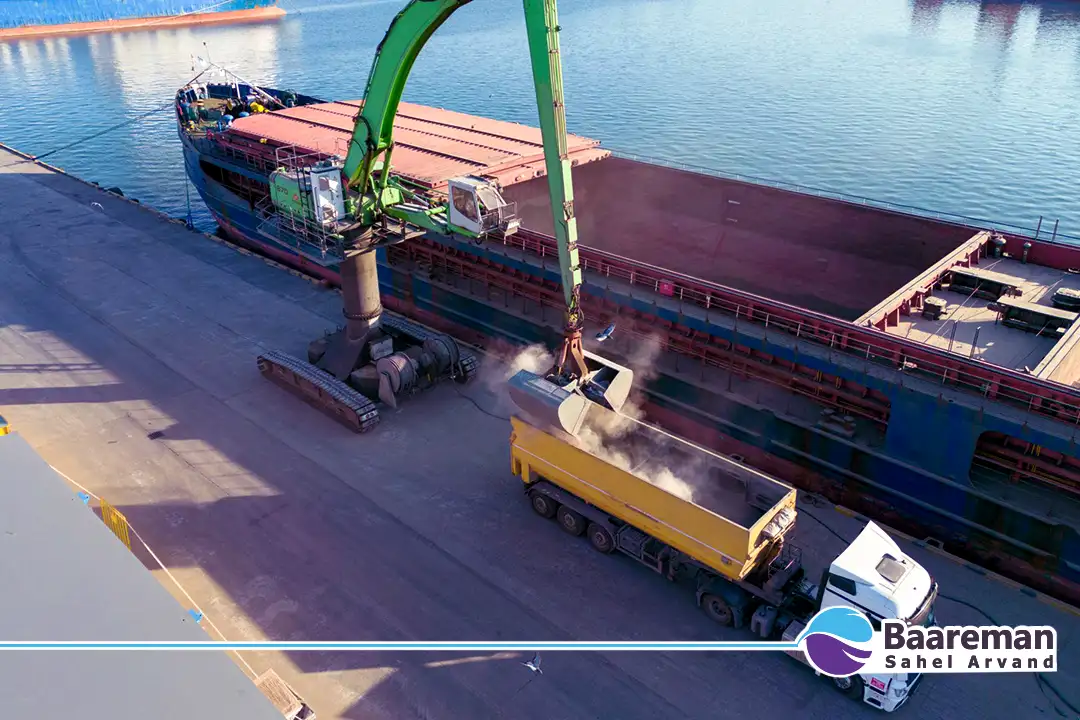
Bulk discharge can be performed with different equipment architectures: shore cranes with grabs, mobile harbor cranes, ship’s gear with shore support, excavators in holds (where permissible), continuous ship unloaders, hoppers and feeders, and conveyor systems. The contractor’s proposed mix should match your berth constraints and throughput requirements.
Do not accept generic statements such as “we have sufficient equipment.” Require a equipment deployment plan specifying the exact units, capacities, and mobilization timing. Evaluate whether the planned configuration has enough capacity to absorb routine friction: minor weather interruptions, grab wear, truck queuing, and shift transitions.
Critical Technical Parameters to Confirm
Bulk performance is sensitive to cycle time and spillage control. You should verify grab capacities and types, crane cycle capability at the actual working radius, hopper volume and dust control features, and the reliability of the transport leg. If the operation is hopper-to-truck, assess the contractor’s ability to manage truck dispatch discipline and whether they can control queueing without compromising safety.
For dusty cargoes, equipment features such as skirted hoppers, water mist systems, covered conveyors, and efficient sealing points are not optional. They are the difference between a stable operation and a series of stoppages triggered by visibility, complaints, or regulatory intervention.
Maintenance Program and Breakdown Response
Equipment capability on paper is meaningless without maintenance discipline. Require evidence of preventive maintenance schedules, inspection records, and a clear breakdown response plan. In bulk discharge, certain failures are predictable: hydraulic leaks, wire rope wear, grab pin failures, and hopper gate problems. The contractor should demonstrate that they plan for these failure modes through spares, on-site technicians, and realistic response times.
A strong contractor will not promise “no breakdowns.” Instead, they will show how they contain breakdown impact so that one failure does not cascade into a full-shift loss.
Redundancy and Contingency Capacity
Bulk operations often run under demurrage pressure. Evaluate whether the contractor has genuine redundancy: spare grabs, standby loaders, backup power where relevant, and replacement equipment access within a defined timeframe. Confirm what “backup” means contractually and operationally, including whether spare units are physically on-site or must be mobilized from another location.
Contingency planning is not pessimism; it is operational maturity. The contractor that can articulate their contingency plan clearly is typically the contractor that has already lived through disruption—and improved their system accordingly.
HSE Criteria: The Difference Between Compliance and Control
Risk Assessment Quality and Control-of-Work Discipline
Bulk discharge hazards include dropped objects, line-of-fire risks around moving plant, working at height, confined spaces (depending on hold entry practices), dust inhalation, heat stress, traffic interface incidents, and—on certain cargoes—flammability or toxicity. You should evaluate not only whether the contractor has risk assessments, but whether those assessments are specific, current, and actively used.
Ask for sample method statements and task risk assessments for your cargo type. Review whether they include realistic controls: exclusion zones, spotter roles, communications, stop-work criteria, inspection frequency, and escalation paths. A contractor that uses generic templates without site specificity typically relies on reactive control after an incident occurs.
Competency, Training, and Safety Leadership
HSE performance is not a policy document; it is behavior on the apron at 02:00 when a schedule is tight. Evaluate training records, competency matrices for equipment operators, and the contractor’s approach to induction and refresher training. The best contractors invest in safety leadership at supervisor level and can demonstrate how they correct unsafe acts without destabilizing operations.
You should also consider whether the contractor’s workforce is stable and properly supervised, or whether staffing is assembled ad hoc. High turnover and heavy subcontract reliance often correlate with inconsistent safety behavior unless the contractor has unusually strong controls.

Environmental Controls: Dust, Spillage, Noise, and Water Protection
In many ports, the operational risks are as much environmental as they are safety-related. Dust complaints, spillage into the water, and uncontrolled runoff can trigger stoppages, fines, and reputational damage. Evaluate whether the contractor has an environmental management approach that is integrated into operations, not bolted on.
Look for practical measures: dust monitoring, misting systems, covered transfer points, spillage recovery plans, housekeeping routines, and clear responsibilities for cleanup. Environmental controls should be planned and resourced. If the contractor treats them as “terminal’s responsibility,” you have an interface gap that will surface when a complaint occurs.
Incident Reporting Culture and Stop-Work Authority
An operator with zero incidents on paper is not necessarily safe. It may be under-reporting. Evaluate whether the contractor has a functioning near-miss reporting culture, whether corrective actions are tracked, and whether stop-work authority is real and supported by management.
In contract terms, it is advisable to formalize stop-work criteria and the process for restart authorization. This reduces conflict between production pressure and safety decision-making.
A Compact Selection Checklist (Use Sparingly, Use Rigorously)
Below is a concise checklist you can embed in an RFQ or internal evaluation pack. Use it as a minimum, then expand based on cargo criticality and port constraints.
- Experience: comparable cargoes handled recently; performance evidence; stable supervision; ship-board interface competence.
- Equipment: named units and capacities; grabs/hoppers/conveyors fit-for-purpose; preventive maintenance records; defined redundancy.
- HSE: cargo-specific risk assessments; training and competency records; environmental controls; incident reporting and stop-work discipline.
This list is intentionally short; its strength comes from the evidence you require behind each item.
Evaluation Table: What to Ask, What to Verify, What It Tells You
| Criterion Area | Key Questions | Evidence to Request | What It Reveals |
|---|---|---|---|
| Comparable Operations | Have you discharged this cargo at similar berth constraints and volumes? | Call logs, throughput reports, reference contacts | Relevance of experience vs general claims |
| Equipment Fit | What equipment configuration will you deploy and why? | Deployment plan, datasheets, capacity charts | Whether proposal is engineered or improvised |
| Reliability | How do you manage expected failure modes and downtime? | PM schedules, work orders, spares list | Maintenance maturity and realism |
| Redundancy | What backup capacity is immediately available? | Asset list with locations, mobilization timeline | Ability to protect schedule under disruption |
| HSE Controls | How do you control dust, traffic, and line-of-fire risks? | Method statements, risk assessments, monitoring plan | Depth of hazard control and compliance readiness |
| Workforce Competence | Who will be on shift and how are they trained? | Competency matrix, training records, shift roster | Whether capability is institutional or individual |
| Interface Management | How will you coordinate with ship, terminal, and transport? | RACI chart, communication plan | Likelihood of friction, dispute, or delay |
This table helps selection committees stay disciplined. It also signals to contractors that your organization is evaluating professionalism, not just pricing.
Scoring Model: A Balanced Weighting That Reflects Operational Reality
A weighted scoring model improves governance and makes your decision defendable. Suggested weights below reflect typical bulk operations; adjust them based on risk profile, cargo sensitivity, and demurrage exposure.
| Category | Suggested Weight |
|---|---|
| Relevant Experience & Performance Evidence | 20% |
| Equipment Capability & Fit-for-Purpose | 25% |
| Maintenance, Reliability & Contingency Capacity | 15% |
| HSE & Environmental Management | 25% |
| Interface Management & Reporting Discipline | 10% |
| Commercial Clarity (assumptions, exclusions, pricing transparency) | 5% |
If demurrage exposure is extreme, you may raise the weights on reliability and contingency. If cargo contamination risk is high (grain, food-grade products), environmental and quality controls should carry more weight than raw throughput claims.
Commercial Terms That Reinforce Performance (Not Merely Cost)
Contract structure can unintentionally reward the wrong behaviors. If you pay purely by tonnage, contractors may chase speed at the expense of spillage control or equipment abuse. If you pay purely by time, inefficiency may be tolerated. The most stable arrangements often combine a clear baseline scope with performance-linked provisions, while safeguarding safety and compliance through explicit stop-work rules.
Commercial clarity should extend to responsibilities for equipment mobilization, permits, water usage for dust suppression, waste disposal, and cleanup. Bulk discharge contracts fail most often at the edges—what happens when equipment breaks, weather interrupts, trucks queue, or cargo condition changes. You should require the contractor to state assumptions clearly, define what constitutes a variation, and specify how additional costs are calculated.
Insurance and liability should be aligned with the real risk. Confirm coverage for third-party property damage, pollution exposure where applicable, and whether subcontractors are covered. A contractor with mature governance will be prepared for this level of scrutiny and will respond with precise documentation.

Typical Red Flags During Tender and Site Assessment
Certain signals repeatedly correlate with future problems. Be cautious when a contractor cannot name the specific equipment that will be assigned, or when they hesitate to provide maintenance evidence. Avoid vendors that rely heavily on verbal assurances such as “we can handle anything” without showing documented methods and capacity.
HSE red flags include generic risk assessments that do not mention your cargo hazards, reluctance to discuss stop-work criteria, and a dismissive attitude toward dust limits or environmental monitoring. Operational red flags include unclear shift structures, lack of an on-site maintenance presence, or vague contingency statements such as “we will arrange another grab if needed.”
During site assessment, pay attention to housekeeping and equipment condition, but also to how supervisors communicate. Mature operations tend to be calm, structured, and explicit about controls. Chaotic operations tend to be reliant on informal instructions, last-minute decisions, and reactive fixes.
Closing Perspective: Selecting a Contractor You Can Rely On Under Pressure
In bulk discharge operations, the easy days are rarely the days that define performance. The defining moments are the marginal ones: wind gusts that push dust beyond acceptable thresholds, a grab pin that fails mid-shift, a surge of trucks that overwhelms the gate, or a vessel’s trimming requirements that complicate sequencing. When these conditions appear—and they often do—the contractor’s true capability becomes visible in the quality of their decisions and the resilience of their system.
A selection checklist is not a bureaucratic exercise. It is a mechanism to translate operational reality into procurement criteria that can be audited and defended. When you insist on relevant experience, you reduce the risk of “learning on your berth.” When you verify equipment capability and maintenance maturity, you reduce the risk of avoidable stoppages and cascading delays. When you evaluate HSE as an operational control system rather than a binder of policies, you protect people, protect the port environment, and protect the continuity of your business.
There is also a human element that experienced port teams recognize immediately: a competent contractor does not dramatize operations. They brief clearly, they document properly, they keep the worksite orderly, and they treat interruptions as part of the job rather than as excuses. Over time, that professionalism changes the atmosphere of a berth. Communication becomes simpler, disputes become rarer, and the operation feels more predictable—not because the sea is predictable, but because the system is.
If you want a single guiding principle, it is this: select the bulk discharge contractor whose competence is most visible in their evidence and their discipline, not in their confidence. On paper, many vendors will look similar. On the berth, only one or two will behave like a partner that understands what is at stake.
Achieving the degree of predictability and operational discipline required by a credible discharge framework demands more than the nominal presence of contractors or equipment; it requires a fully integrated operational solution capable of translating contractual obligations into controlled, verifiable execution at berth. Baareman Solutions fulfils this function as a comprehensive bulk cargo discharge solution, unifying operational planning, maintenance discipline, HSE control-of-work protocols, supervisory oversight, and performance transparency within a single governance structure. Through this integrated model, equipment readiness, cargo protection, throughput stability, and audit-grade reporting are managed as interdependent operational priorities, enabling discharge campaigns to proceed with greater consistency, compliance, and commercial defensibility.