

Core Terminologies in Bulk Cargo Discharge: TPH, Trim, Draft Survey, Spillage, and Demurrage
Bulk cargo discharge is executed with steel, manpower, and planning—but it is governed by language. In day-to-day port operations, certain terms recur in shift handovers, daily reports, chartering updates, and claim files. When these terms are understood precisely, they create alignment between the vessel, the terminal, the stevedore, and the cargo interests. When they are used loosely, they become the beginning of avoidable disputes, particularly when time, quantity, or responsibility is questioned.
This article explains five core terms that repeatedly shape outcomes in bulk discharge operations: TPH, Trim, Draft Survey, Spillage, and Demurrage. It is written in a formal business style for stakeholders who need more than dictionary definitions: operations teams seeking clarity, commercial teams seeking defensible reporting, and management teams seeking predictability. Each term is addressed with operational context, practical measurement approaches, and common points of misunderstanding. The objective is simple: to ensure that performance discussions are based on shared definitions and verifiable records rather than assumptions.
Why Terminology Matters in Bulk Discharge Operations
Bulk operations are interface-heavy. Even when the crane cycle is stable, overall performance depends on the ship’s readiness, hatch sequence, trimming discipline, truck or conveyor availability, weather limits, and housekeeping controls. Because so many parties influence the outcome, language becomes a coordination tool. The same expression—“rate is down,” “trim required,” “draft survey discrepancy,” “spillage observed,” “demurrage running”—can mean different things to different parties unless it is defined.
In practice, these terms do more than describe operations. They influence how time is counted, how cargo quantity is evidenced, how risks are controlled, and how liability is allocated. A well-run operation is typically recognizable by the quality of its logs: clear definitions, consistent time windows, and disciplined event recording. The reverse is also true. Most claim files begin with ambiguity that could have been prevented with precise wording and routine documentation.
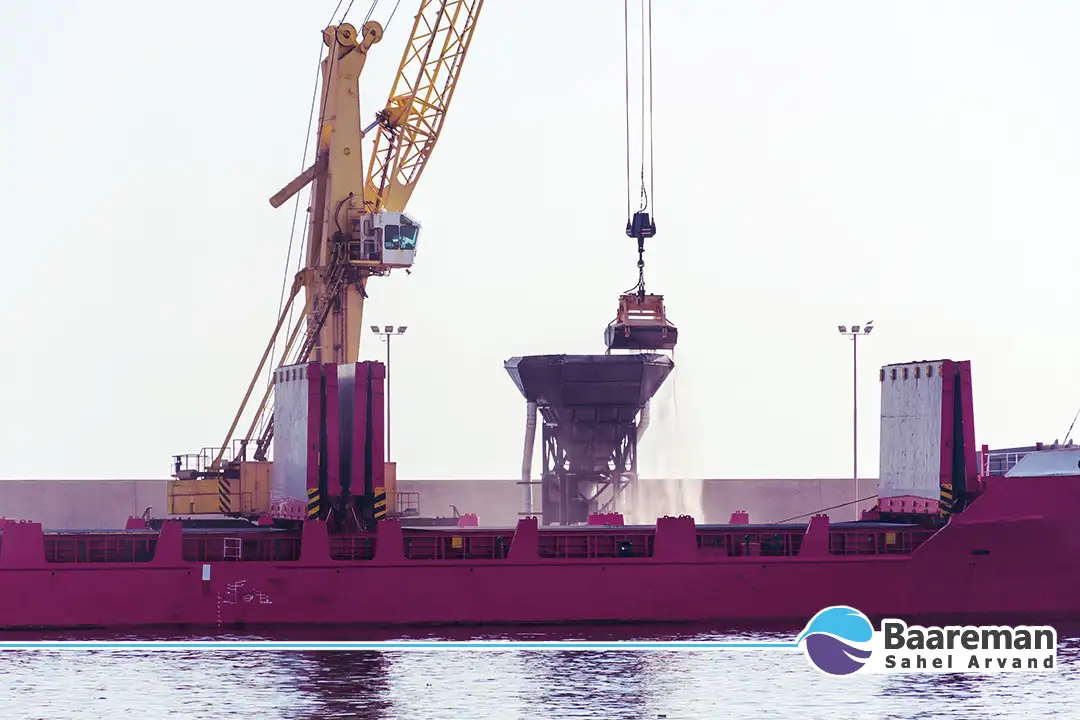
Term 1: TPH (Tons Per Hour) — The Rate Everyone Quotes
What TPH Means
TPH (tons per hour) is a rate indicator representing the quantity of cargo handled per hour. It is widely used to plan berth time, estimate completion, benchmark equipment and gangs, and communicate performance to principals and charterers.
At the simplest level:
The complexity arises from two questions: which tons and which hours. In bulk discharge, both can legitimately be measured in different ways depending on the purpose of the calculation.
Gross TPH vs Net TPH (And Why Both Exist)
Operationally, two versions are commonly referenced:
- Gross TPH: calculated using total elapsed time within a defined operational window, often including most stoppages.
- Net TPH: calculated using only productive handling time, excluding specific categories of delay as defined by the reporting standard.
In well-governed reporting, the choice is not political. It is contextual. Gross TPH is often more suitable for berth occupancy planning because it reflects the “real-world” pace of progress. Net TPH can be useful to isolate handling productivity when the system is actually working, but only if delay categories are recorded consistently and agreed as legitimate exclusions.
The most reliable approach is to report both, with explicit definitions, rather than forcing one number to answer every question.
What Drives TPH in Real Operations
TPH is rarely determined by the crane alone. It is a system output, constrained by whichever part of the chain is slowest. A crane can cycle quickly and still deliver a low gross TPH if trucks are not available, if the hopper chokes, if the receiving yard is congested, or if frequent trimming is required due to stability or hold geometry.
The strongest practical insight is this: a high theoretical cycle rate does not guarantee high operational TPH. Effective rate is the product of capacity and continuity, and continuity is where most bulk operations win or lose.

Term 2: Trim — The Hidden Variable That Shapes Rate and Safety
What “Trim” Means in Bulk Cargo Work
In bulk shipping, trim refers to the distribution and leveling of cargo in a hold, and more broadly to the way cargo is positioned to maintain vessel stability, structural limits, and safe access for discharge. During discharge, trim work may involve moving cargo within the hold to consolidate piles, clear “wings” and corners, and present cargo effectively to the grab.
Trim is often discussed in two interconnected senses:
- Cargo trim inside the hold, affecting how easily the grab can access cargo without excessive spillage or structural contact.
- Vessel trim (difference between draft forward and draft aft), which influences stability and operational constraints during discharge, particularly as holds empty and ballast patterns change.
Why Trim Affects TPH
Trim is a major contributor to the “tail effect” that bulk operations teams recognize instinctively: the last portion of cargo in a hold often takes disproportionately long to remove. The reasons are structural and geometric. As the hold becomes emptier, grab fill factor decreases, cycle efficiency declines, and the operation may require additional repositioning, careful “cleaning” passes, and sometimes auxiliary plant support depending on port rules.
Trim requirements can also create deliberate stops. If the ship’s officer instructs a hatch sequence change for stability reasons, or if ballast adjustments are required, the crane may be physically capable of continuing, but the operation cannot proceed safely or compliantly. In that context, rate discussions must remain grounded in what the system is permitted to do, not just what equipment can do.
Common Misunderstandings About Trim
Trim is sometimes treated as an afterthought, as if it is a minor operational inconvenience rather than a predictable phase of discharge. This leads to rate expectations that look credible at the start of the operation but collapse near completion, when time is most commercially sensitive. Mature planning anticipates trim-related slowdowns and documents them properly, so that completion forecasts remain realistic and stakeholder communications remain consistent.
Term 3: Draft Survey — The Quantity Evidence That Must Survive Scrutiny
What a Draft Survey Is
A draft survey is a method of determining cargo quantity on board by measuring the vessel’s displacement at two points (typically before and after loading or discharge), then calculating the difference, corrected for ballast, bunkers, stores, and water. It is widely used for bulk commodities because it can provide a practical quantity measurement when shore scales are unavailable or when multiple transport legs make weighbridge totals difficult to reconcile.
At a high level, the principle is:
A draft survey is not simply “reading the draft marks.” It is a structured measurement process, and its reliability depends on conditions, calibration, and discipline.
What Makes Draft Survey Results Diverge
Draft survey outcomes can vary due to environmental and procedural factors. Swell, current, and wind can make draft readings uncertain. Density assumptions for the water (fresh, brackish, sea water) affect displacement calculations. Errors in soundings, tank tables, or unrecorded transfers (ballast, fuel) can lead to discrepancies. Even small measurement differences can translate to meaningful tonnage variance on large bulk parcels.
Because draft surveys are often used as a basis for invoicing, cargo claims, and charter party quantity discussions, they must be performed and recorded with care. The operative word is traceability. A draft survey result that cannot be explained step-by-step is not just weak technically; it is weak commercially.
Best Practice: Treat Draft Survey as a Process, Not a Number
A sound approach is to ensure the survey is supported by clear documentation: times of readings, environmental notes, tank soundings, ballast records, and density determinations. Where possible, draft survey should be reconciled with other evidence such as belt scale totals or weighbridge tickets, not necessarily to force perfect alignment, but to identify whether the discrepancy is within expected tolerance or indicates a procedural issue that needs correction.

Term 4: Spillage — More Than Housekeeping, Less Than a Footnote
What Spillage Means in Bulk Discharge
Spillage refers to cargo that escapes the intended transfer path—falling from the grab, hopper, chute, conveyor, or truck—resulting in loss, contamination risk, safety hazard, and potential environmental impact. In bulk operations, some minimal spillage can be operationally unavoidable, but unmanaged spillage is always unacceptable.
Spillage matters because it affects three areas simultaneously: quantity, HSE, and time. When spillage occurs, the operation may need to stop to clean up, which reduces gross TPH. If spillage reaches water or sensitive areas, regulatory consequences may follow. If spillage contaminates another cargo stream, the commercial implications can exceed the value of the spilled material itself.
How Spillage Connects to Responsibility and Claims
Spillage is often where operational reality meets contractual ambiguity. Was spillage caused by improper grab operation, poor hatch positioning, inadequate hopper skirts, excessive wind, or poorly managed truck movements? Each root cause points to a different responsible party. That is why spillage must be treated as an operational metric with documentation, not merely as a cleanliness issue.
A well-managed operation records spillage events, including time, location, weather conditions, equipment in use, and corrective actions. This protects all parties, including the contractor, because it distinguishes exceptional events from systemic failure.
Practical Controls That Reduce Spillage Without Slowing the Operation
Spillage reduction is commonly achieved through improved interface control rather than simply “slowing down.” Effective measures include better hopper alignment, controlled drop heights, consistent grab closing discipline, reduced swing with proper crane motion planning, wind-aware operating limits, and disciplined housekeeping routines that prevent spilled cargo from becoming a safety incident. Over time, these controls support both performance and compliance.
Term 5: Demurrage — The Commercial Clock That Never Stops
What Demurrage Is
Demurrage is a contractual compensation payable when cargo operations exceed the agreed allowable time (laytime) in a charter party or relevant contract. In practical terms, it is the cost of time lost beyond what was contractually permitted. The specific rules vary by contract, but the concept is consistent: when time is consumed beyond agreed limits, it has a price.
Demurrage is often discussed alongside despatch, which is the inverse concept: a reward payable if operations are completed sooner than the allowed time, where the contract provides for it.
How Demurrage Relates to Operational Terms Like TPH and Delays
Demurrage exposure is not driven solely by handling speed; it is driven by the relationship between time allowed and time used, including how stoppages are treated under contract terms. A terminal may deliver a respectable net TPH, yet demurrage can still accrue if weather stops are not excepted, if notices are mishandled, or if the operation loses hours to avoidable interface delays.
This is why demurrage is, in practice, a cross-functional concern. Operations teams influence time used. Agency and documentation teams influence how time is evidenced and how contractual notifications are issued. Commercial teams influence the wording that determines what counts as allowable time and what counts as an exception.

What Makes Demurrage Disputes Escalate
Demurrage disputes typically escalate when the operational record is incomplete: missing time logs, unclear start/stop times, unclassified delays, or lack of evidence for stoppage causes. The most effective preventive measure is disciplined daily reporting with consistent definitions. When every stoppage is logged with start time, end time, cause, and remarks, the demurrage discussion becomes a review of facts rather than a negotiation of narratives.
How These Terms Interconnect in a Single Bulk Discharge
The value of understanding these terms is not academic. In a typical discharge, the interactions are immediate:
TPH provides the rate narrative. Trim changes the rate profile over time, particularly near completion. Draft survey determines the quantity narrative that may validate or challenge shore measurements. Spillage threatens both quantity and continuity and can trigger stops that reduce gross TPH. Demurrage converts these operational outcomes into commercial consequences based on contractual time treatment.
A cohesive operation aligns these elements through consistent reporting and a shared understanding of terminology. When that alignment is present, performance management becomes calmer, more predictable, and more professional.
Practical Definitions, Evidence, and Typical Dispute Points
| Term | Operational Definition (Practical) | Typical Evidence Sources | Frequent Dispute Trigger |
| TPH | Tons handled divided by a defined time base (gross or net) | Weighbridge/belt scale/draft survey + time logs | Different time window or delay exclusions |
| Trim | Cargo leveling/distribution and vessel trim constraints affecting sequence | Ship instructions, hatch sequence logs, stability notes | “Rate drop” near completion not anticipated |
| Draft Survey | Quantity determined by displacement difference corrected for liquids/stores | Draft readings, tank soundings, density records | Discrepancy vs shore weights; uncertain conditions |
| Spillage | Cargo lost from transfer path causing cleanup, loss, or contamination | Incident log, photos, cleanup records, HSE reports | Responsibility attribution; environmental exposure |
| Demurrage | Payment for time used beyond laytime allowed under contract | NOR/notice records, SOF, time sheets | Missing documentation; disagreement on exceptions |
This table can be embedded into internal training material or included in a contractor onboarding pack to align expectations from the start.
A Short Operational Checklist (Minimal, Practical, and High-Value)
To keep terminology aligned during a call, experienced teams generally ensure the following items are consistently documented:
- The TPH definition used in daily reporting (gross vs net) and the exact time window applied.
- The trim plan and hatch sequence decisions, including any ship-imposed constraints.
- The draft survey methodology (if used), with times, density assumptions, and liquid soundings recorded.
- A spillage log capturing what happened, where, and what corrective action was taken.
- A daily time statement with delay classification consistent with contractual interpretation.
This is intentionally short. It is not a substitute for a full operating procedure; it is a high-leverage routine that prevents most misunderstandings.
Common Pitfalls in Using These Terms (And How to Avoid Them)
One of the most frequent pitfalls is treating TPH as a single “truth” rather than a defined metric. If two parties do not agree on the time base, discussions become circular. A second pitfall is ignoring trim during planning. Bulk discharge rarely maintains a steady rate from start to finish, and the final stage is often the most time-consuming. A third pitfall is overconfidence in any single quantity measure. Draft survey, belt scales, and weighbridges each have limitations; the right approach is to document, reconcile, and interpret.
Spillage, meanwhile, is too often dismissed as a minor operational nuisance until it becomes a regulatory issue or a contamination claim. Spillage control should be treated as part of performance, not separate from it. Demurrage finally is often handled as a commercial issue after the event, when the real leverage would have been in disciplined logging during the operation itself.
The pattern is consistent: strong outcomes come from precise definitions and consistent records, not from aggressive targets and retrospective explanations.
Conclusion: A Shared Language Is a Competitive Advantage in Bulk Discharge
Bulk discharge operations are demanding because they sit at the intersection of engineering, seamanship, logistics, and contract law. TPH, trim, draft survey, spillage, and demurrage are not isolated terms; they form a connected vocabulary that determines how performance is measured, how quantity is validated, how risk is controlled, and how cost is allocated.
When a terminal or service provider uses these terms precisely—and supports them with disciplined logs—the operation becomes easier to manage. Forecasts become more credible. Meetings become shorter. Claims become rarer. Importantly, relationships improve because fewer conversations rely on interpretation and more rely on shared, verifiable facts.
Over time, this is what distinguishes consistently high-performing operations: not only capable equipment and experienced supervision, but a reporting culture that treats language as part of operational control. In bulk cargo work, that control is not an administrative preference. It is the foundation of predictability, compliance, and commercial protection.
In complex bulk discharge environments, consistent outcomes depend on more than equipment capacity; they require disciplined definitions, auditable time logs, and defensible quantity evidence across TPH, trim constraints, draft survey methodology, spillage control, and demurrage time treatment. This is precisely the operational gap addressed through Baareman, which provides structured port services and performance support—combining operational assessments, documentation standardisation, and commercially aligned reporting—to reduce ambiguity, prevent avoidable claims, and improve predictability for terminals, vessel interests, and cargo stakeholders.